A few years ago, software was expected to do what people told it to do.
Today, that is changing.
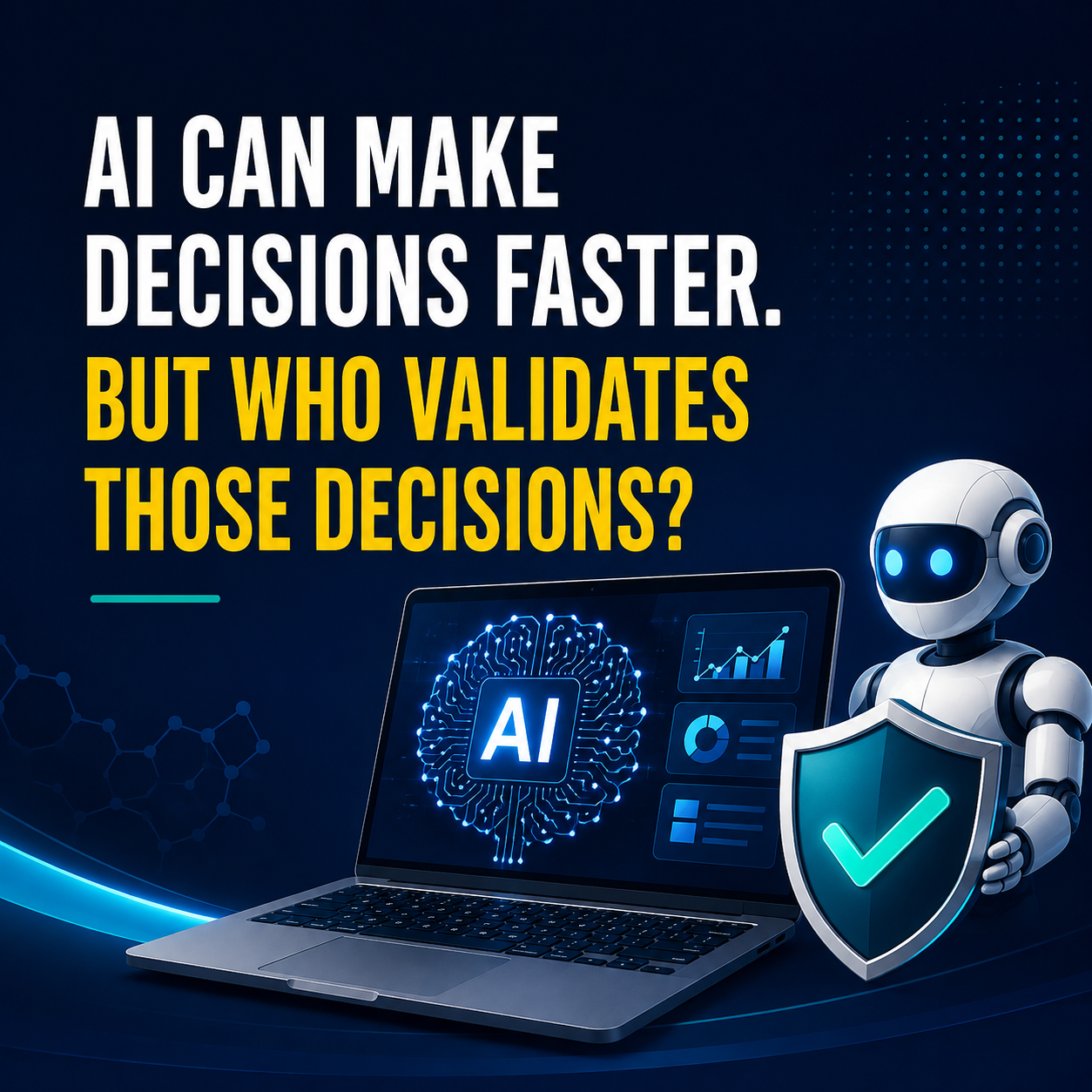
AI tools can review large amounts of information, identify patterns, suggest actions, flag unusual results and support decisions much faster than a person could. For pharmaceutical companies, this sounds useful—and in many cases, it is.
But there is one question that deserves more attention:
If AI helps make an important decision, who is responsible for proving that the decision can be trusted?
That question becomes especially important when AI is used in a regulated environment.
Because speed is helpful.
Automation is helpful.
But in pharma, being fast is not enough.
Imagine this situation
An AI-based system reviews a large amount of manufacturing or quality data and identifies something unusual. It recommends that the batch should be investigated.
The team follows the recommendation.
Later, during an audit, someone asks:
Why did the system flag this batch?
The answer cannot simply be:
“Because the AI said so.”
The next questions may be uncomfortable.
What data was used?
What rules or model behaviour influenced the output?
Was the system tested for its intended use?
What happens when the AI gives a wrong recommendation?
Has the system changed since it was originally assessed?
And perhaps the most important question:
Who validated this process?
This is where the discussion around AI becomes much more complicated.
The problem is not that AI makes decisions
Let’s be clear—AI itself is not automatically the problem.
The concern starts when organisations begin trusting AI outputs without properly understanding the controls around them.
Traditional software usually follows defined instructions.
If you click a button, a particular action happens.
AI can be different. Depending on the technology, its behaviour may depend on models, training data, configuration, prompts, updates and other factors.
That creates a new challenge for Computer System Validation (CSV).
With a normal system, the question may be:
“Does the system perform the required function?”
With AI, another question can appear:
“How do we know the output is reliable enough for its intended use?”
That is not always easy to answer.
Faster decisions can create faster mistakes too
AI can process information in seconds.
But processing something quickly does not guarantee that the result is correct.
An AI system can work with incomplete information.
It can misunderstand context.
It can produce an answer that sounds confident but is wrong.
And if people trust that answer simply because it came from an advanced system, the risk becomes bigger.
In a regulated pharmaceutical process, one incorrect recommendation may affect more than just productivity.
It could influence quality decisions, clinical data, safety information or other GxP activities.
That is why AI risk assessment should happen before an organisation starts using an AI tool for important regulated work—not after a problem appears.
A simple way to look at it
AI Output
↓
Human or System Decision
↓
Impact on Product / Patient / Data
↓
Can the organisation explain and support that decision?
If the answer to the last question is unclear, there may already be a validation gap.
What happens when the AI changes?
This is another challenge.
A system may be assessed today.
Then the vendor releases an update.
The underlying model changes.
A new feature is added.
The data source changes.
The organisation starts using the same AI tool for a completely different purpose.
Now, is the original validation still enough?
Maybe.
Maybe not.
The answer depends on the intended use and the impact of the change.
This is why change control, impact assessment and lifecycle management become important when working with AI systems.
Validation should not be treated as a document created once and forgotten.
The system being used today should still be understood and appropriately controlled.
The human role is still important
There is a common assumption that AI will reduce the need for human involvement.
In some activities, it may reduce manual effort.
But when it comes to regulated decisions, human responsibility does not simply disappear.
Someone still needs to define how the AI should be used.
Someone needs to assess the risk.
Someone needs to decide whether the output requires human review.
Someone needs to manage changes.
And someone must be able to provide evidence when an auditor asks questions.
AI may support a decision.
Accountability still belongs to people and organisations.
That distinction matters.
So, how should pharma companies approach AI?
Not by rejecting it.
And not by accepting every new AI tool without asking questions.
A practical approach is to start with the intended use.
What exactly is the AI doing?
Is it only helping with administrative work?
Or is its output influencing a GxP decision?
What data does it access?
Can the output be reviewed?
What happens if the AI is wrong?
How are updates managed?
These questions help determine the level of control and AI system validation required.
Where SkillBee Solution can help
As AI becomes part of pharmaceutical and life sciences operations, companies need to think beyond implementation.
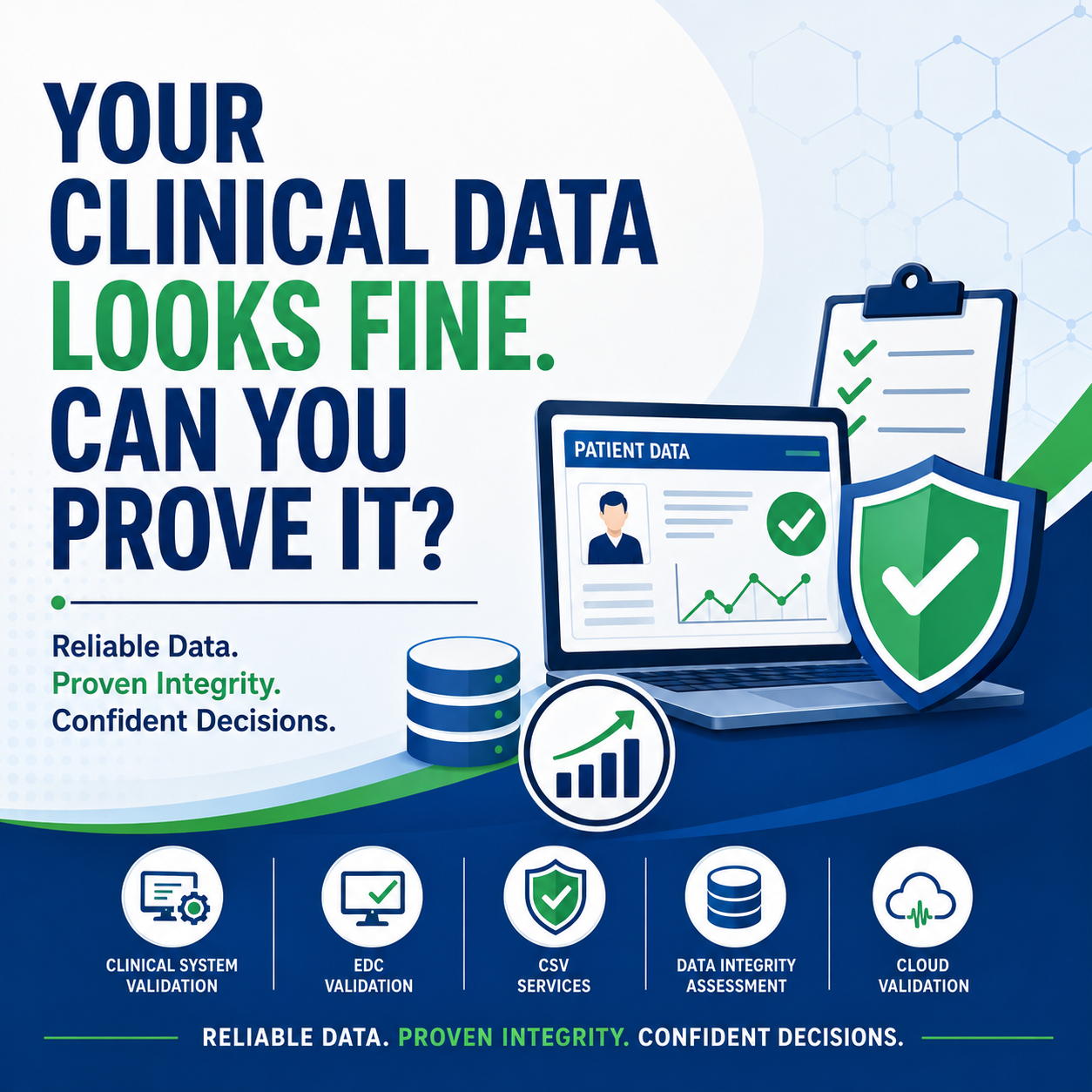
At SkillBee Solution, we support organisations with Computer System Validation (CSV), risk assessment, data integrity assessment, validation documentation, testing, change control, cloud validation and audit readiness.
For AI-enabled or advanced computerized systems, the focus should remain practical:
Understand the intended use. Assess the risk. Define the controls. Maintain evidence.
SkillBee Solution supports pharmaceutical organisations in Bengaluru, Hyderabad and other locations, helping them manage validation and compliance challenges across regulated computerized systems.
The real question is not whether AI can make decisions faster.
It clearly can.
The real question is whether your organisation can explain, control and defend those decisions when it matters.
SkillBee Solution
Computer System Validation | AI & Digital System Risk Assessment | Data Integrity | GxP Compliance | Cloud Validation | Audit Readiness
 +91 81036-35949
 info@skillbee.co.in
 SkillBee Solution
Helping pharmaceutical companies build controlled, reliable and audit-ready computerized systems.