A pharma company shifted almost everything to digital.
Approvals became electronic.
Departments started using cloud-based systems.
Paper records reduced drastically.
For management, it looked like a successful transformation.
Work became faster.
Tracking became easier.
Reports were available in seconds.
But during an internal review, one simple thing changed the whole discussion.
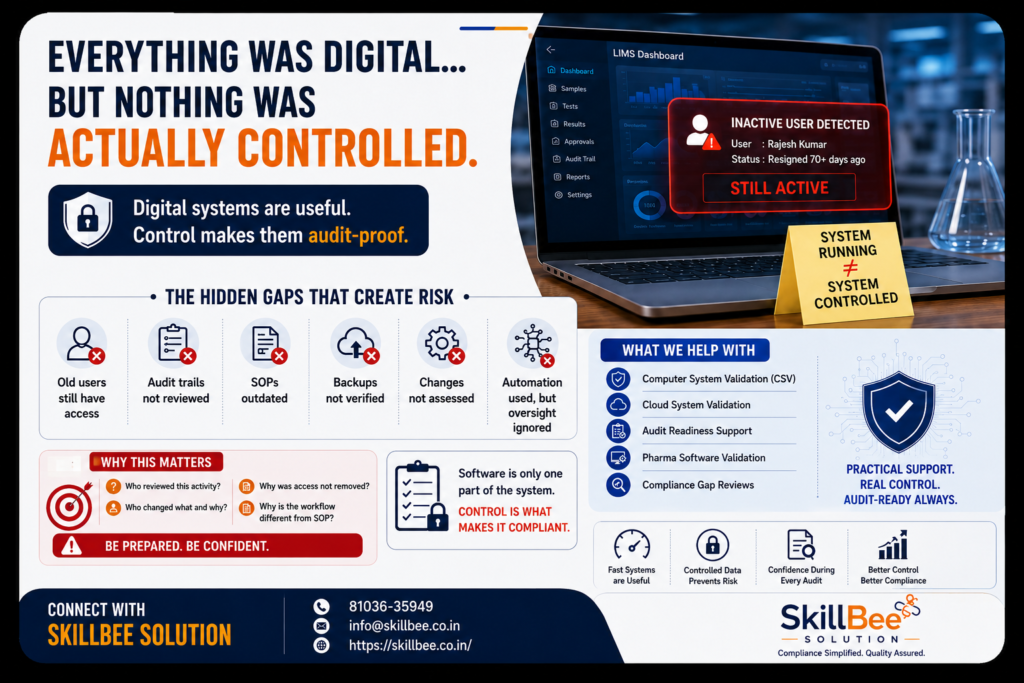
A user account belonging to an employee who had resigned almost 70 days earlier was still active inside the system.
Nobody noticed it.
The software was working perfectly.
The compliance side was not.
And this is not a rare situation anymore.
Across Bengaluru, Hyderabad, and other growing pharma hubs, companies are moving quickly toward digital systems and automation. Many are using:
- cloud platforms
- electronic logs
- automated workflows
- AI-supported tools
The shift is happening everywhere.
But somewhere in between “digital transformation” and actual operations, control starts becoming weak.
Not intentionally.
Usually because teams are overloaded and everyone assumes someone else is already handling it.
At one company, audit trail reviews were missed for almost four months because QA thought IT was checking them regularly, while IT believed QA was already reviewing them.
No system failure happened.
No data loss happened.
Still, during inspection, that single point created unnecessary pressure because nobody had a clear answer.
That’s the difference between: a system running
and a system being controlled properly.
Many companies today are investing heavily in software.
But software alone doesn’t solve compliance problems.
In fact, sometimes digital systems make gaps harder to notice because everything looks organized on screen.
A few clicks.
A dashboard.
Green status everywhere.
Meanwhile:
- old users still have access
- SOPs are outdated
- changes are not reviewed properly
- backup checks are delayed
And these things usually stay hidden until an auditor starts asking direct questions.
Recently, companies across multiple industries started depending heavily on automation and AI tools to speed up operations and reduce manual work.
Some businesses moved so fast toward automation that process control slowly became secondary.
Later they faced workflow confusion, approval mismatches, and expensive correction activities because the process grew faster than the compliance planning behind it.
Pharma companies cannot afford that kind of situation.
Because here, every activity needs traceability.
Every change needs accountability.
And every system eventually faces an audit.
At SkillBee Solution, we work with pharma companies that already have systems in place but still feel uncertain before inspections.
Not because the software is bad.
Most of the time, the issue is much simpler:
the process around the software is not fully controlled.
That’s where practical validation support matters.
We help companies across Bengaluru, Hyderabad, and other locations with:
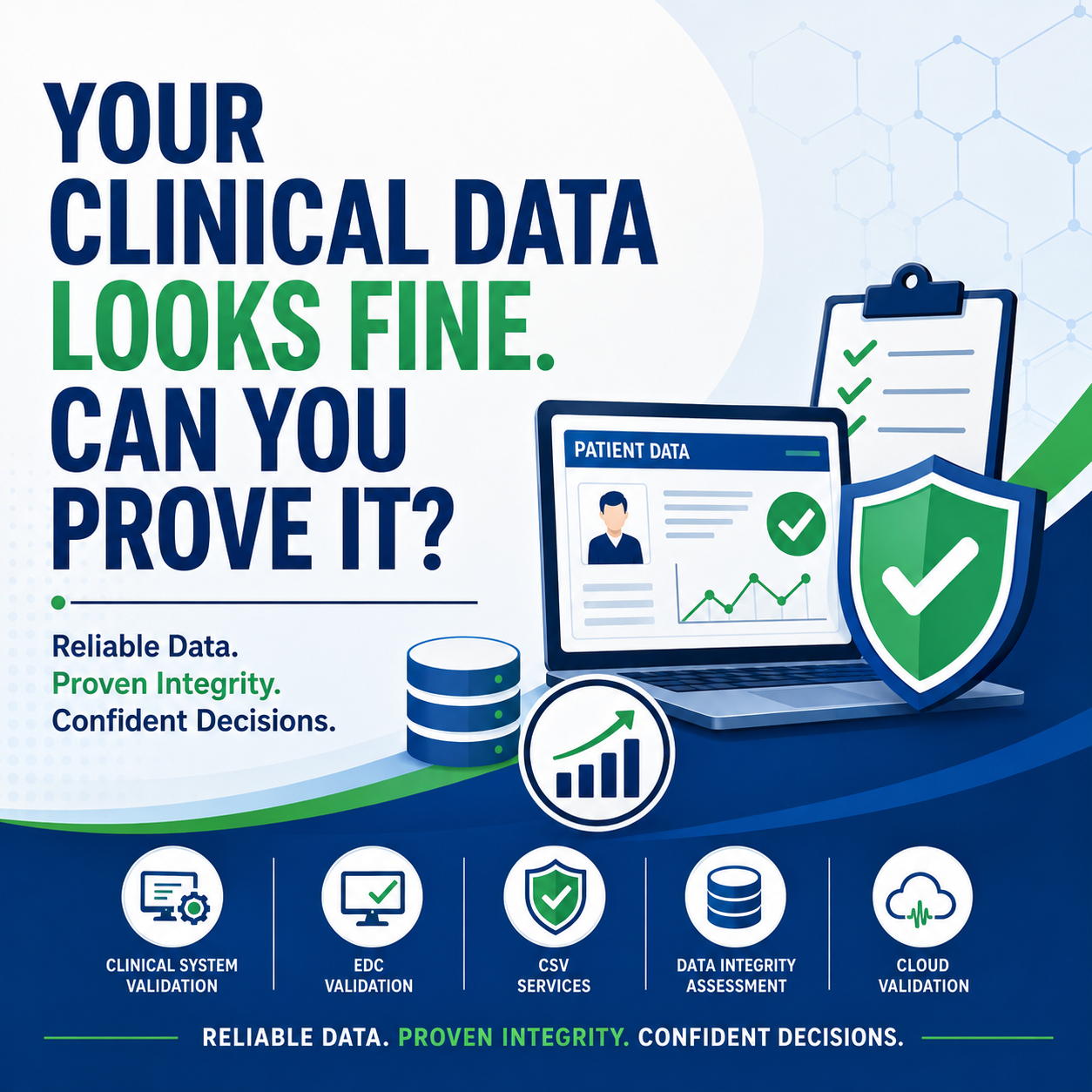
- Computer System Validation (CSV)
- cloud system validation
- audit readiness support
- pharma software validation
- compliance gap reviews
The focus is always practical control — not unnecessary documentation that nobody checks later.
One thing we’ve noticed repeatedly:
The real pressure doesn’t start when systems fail.
It starts when somebody asks: “Can you explain who reviewed this activity?”
And suddenly the room becomes quiet.
Digital systems are important.
Automation is growing fast.
AI tools are entering almost every industry.
But without proper validation and review practices, even advanced systems can create confusion very quietly in the background.
And most companies realize it only when audits begin.
Connect With SkillBee Solution
If your company is moving toward digital systems and wants better compliance control, audit readiness, or CSV support, SkillBee Solution can help simplify the process.
 Contact: 81036-35949
 Email: info@skillbee.co.in
 Website: https://skillbee.co.in/
Because in pharma, software is only one part of the system.